
How do you build an AI platform that is fully compliant, secure and sovereign for the Dutch government and public sector? Daan Witte, co-founder of data and AI agency Gradient and the sovereign AI platform soev.ai, talks about the transition from a physical server in the office to high-quality, scalable infrastructure in NorthC’s data centers.
How soev.ai gives control back to the Dutch public sector through Intermax and NorthC
Experimenting on an office server
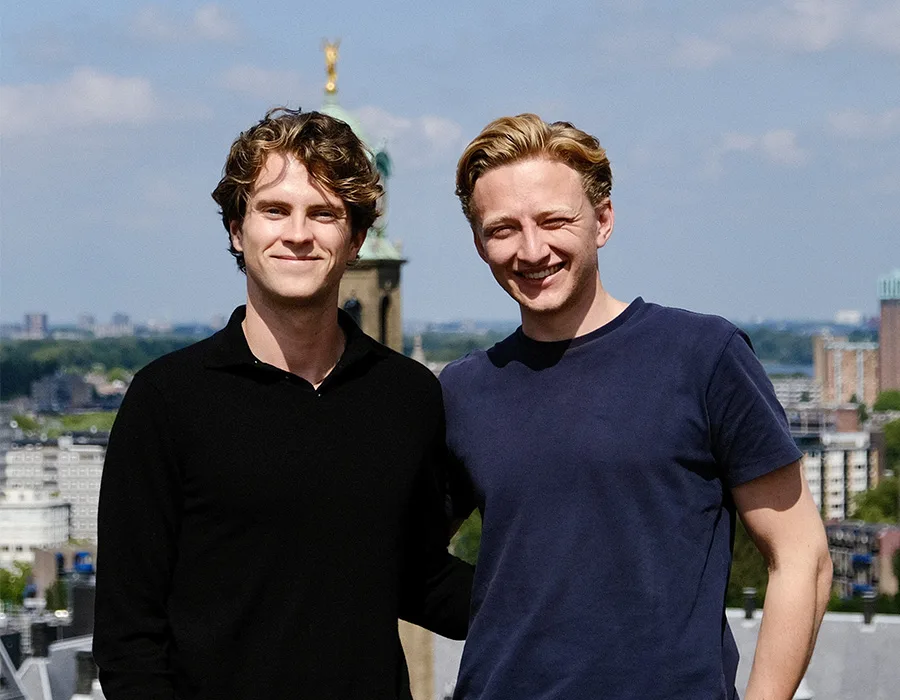
When Daan Witte (left in the photo) and his co-founder Lex Lubbers (right in the photo) – both fresh graduates from Delft – started their agency Gradient two years ago, sovereign AI wasn’t yet the hot topic it is today. Their first client, the Ministry of Agriculture, Fisheries, Food Security and Nature (LVVN), immediately handed them a challenging innovation question: how do you unlock hundreds of thousands of documents for policy officers through AI, in a way that is fully secure and guarantees you retain control over the data yourself? At that early stage, there was no question yet of advanced sovereign cloud infrastructure. Back then, they worked very pragmatically, according to Witte: “In the pilot phase, we simply had a server in the office with our own Nvidia GPU in it. We knew, of course, that this would never be enough to actually go into production, but for experimenting it was perfect”.
The tipping point: why sovereignty suddenly became crucial
Right as the pilot proved successful and was set to be scaled up to hundreds of thousands of sources, a number of major geopolitical shifts took place worldwide, bringing political unrest, looming import tariffs and discussions about data sovereignty. At the same time, the founders received requests from other government bodies that also needed a secure chatbot for sensitive information, with the assurance that their data wouldn’t be funneled off to the US.
That tipped the scales toward launching the soev.ai platform. There was a clear need: organizations were looking for an accessible way to get started with AI, while wanting to retain absolute control over where their data is stored, who manages the application (now and in the future), and a healthy balance between quality and operational costs. Today, soev.ai serves a range of organizations facing the same control and sovereignty challenges, including four ministries, a critical energy organization and municipalities, as well as SME research and consultancy firms.
“The promise is that AI will make organizations 30% to 40% more efficient. No organization wants to hand that over entirely to one external, foreign party.”
Daan Witte, Co-Founder soev.ai
The search and the meeting with Intermax and NorthC
A server in the office is fine for a test, but for production within government, professional, scalable and reliable infrastructure is an absolute requirement. The search for the right partner happened organically. Through the ministry, contact was made with Intermax, a Rotterdam-based cloud hosting company with a strong reputation for sovereignty and security.
It also helped that Intermax was located nearby. “It turned out that Intermax was based in the building right next door to our startup office at the time. We were welcomed with open arms. Intermax believed in our vision, invested in the necessary GPU’s, and that let us get started right away”, says Witte.
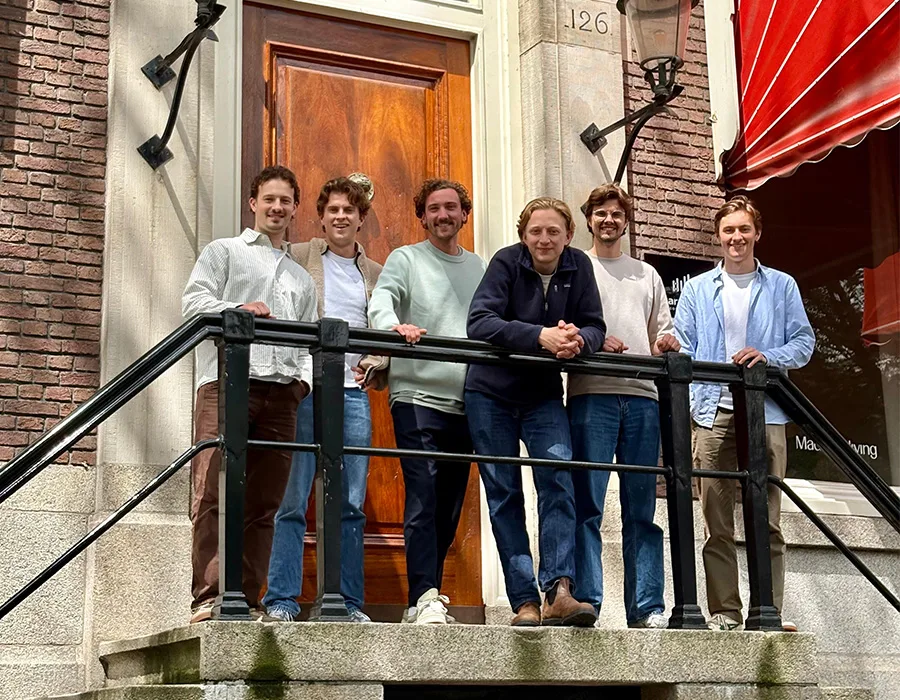
In the photo: the soev.ai team
Physical sovereignty: the role of NorthC
Underlying Intermax’s sovereign cloud solutions is NorthC’s physical foundation. Because sovereignty, in the end, isn’t just a software feature, it’s also something physical: servers you can point to, in a building in the Netherlands, under European jurisdiction, with the power, cooling and connectivity needed to run advanced AI models locally. Soev.ai works with Intermax on a daily basis; NorthC ensures that the entire chain is literally located somewhere in the Netherlands, in regional data center locations close to the organizations building on top of it.
Why colocation and local cloud were the only logical choice
For soev.ai and its clients in the public sector, public American clouds (such as AWS or Azure) weren’t an obvious choice for sensitive use cases, given the lack of genuine control over the technology stack and data, and the compliance risks involved. Choosing a combination of the Dutch company Intermax and NorthC’s data centers offered the perfect balance:
1. Real control and cloud independence:
soev.ai builds everything on open-source technology. This means, for example, that their software runs within Kubernetes environments that can be moved very easily. Should a party ever be acquired by, say, an American company, the entire stack can be quickly and easily moved to another Dutch data center, or even on-premises at the client’s site.
2. Redundancy and security:
For government bodies, redundancy is an absolute requirement. Thanks to the redundant capabilities of NorthC and Intermax, the environment can be set up so that vital processes and services keep running even in the event of a calamity. This isn’t a side note, but an important design principle for delivering services to government.
3. Optimal value for money:
By using smaller open-source AI models such as Mistral, running them on local infrastructure and optimizing them for the client’s specific context, these kinds of targeted applications perform just as well, if not better, at a fraction of the cost of classic cloud models.
The future: agentic AI and the need for sovereignty
Daan Witte emphasizes that sovereignty and reliable local infrastructure will only become more important in the coming years. After all, AI (and soev.ai itself) is shifting from simple chatbots to agentic AI, where AI agents independently carry out processes within organizations.
“The promise is that AI will make organizations 30% to 40% more efficient. No organization wants to hand that over entirely to a single external, foreign party that could simply double its prices or pull the plug. You need to be able to switch when necessary, or simply because you want to. Local, redundant infrastructure like that of NorthC and Intermax is essential for that”, concludes Witte.
With this partnership, soev.ai, Intermax and NorthC show that high-end, compliant and sovereign AI isn’t a thing of the future, but is already running today in the Netherlands, on Dutch infrastructure.